Green Lentil Walnut Lettuce Wraps
Green lentil walnut lettuce wraps start with a glossy sesame-tamari sauce that wakes the nose and sharpens the first bite.
The filling is savory and slightly chewy, a mix of tender legume and toasted nut folded into crisp cups with crunchy carrot, scallion, and toasted sesame on top.
I cook aromatics briefly, simmer the lentils just until they steal the broth, then fold in walnuts at the end so they stay crisp; the technique lets you scale the batch or cool components for quick assembly later.
This is a practical meal that feels like takeout without a long list of ingredients: sauté, simmer, finish, and assemble. I’ll point to simple decisions—which leaf holds best, how to avoid a mushy filling, and how to balance salt and sweetness—so you can cook with confidence and tweak to taste.
Key Takeaways
- This recipe pairs a sesame-tamari sauce with a lentil-and-walnut filling for umami depth.
- Short sauté for aromatics and a covered simmer prevent mushy texture.
- Add walnuts at the finish to preserve crunch and contrast.
- Components can be made ahead and assembled quickly for a ready-to-eat meal.
- Choose sturdy leaves and crisp toppings to avoid tearing during assembly.
- Adjust salt and sweetness in the sauce to suit your palate before serving.
Why these Lettuce Wraps Work for An Easy, High-Protein Meal
A short sauté, a brief simmer, and a simple sauce explain why this method is dependable. Aromatics—onion, garlic, and ginger—get a quick browning to build savory depth. The sauce (soy or tamari, sesame oil, vinegar, and a touch of sweetener) adds umami without exotic pantry items.
Flavor Built from Technique
Cooking the lentils just until they absorb liquid keeps them tender, not mushy. Stirring in chopped nuts at the end preserves crunch. Taste and adjust the sauce so salt and sweetness balance before you finish.
What to Expect in Taste and Texture
- Taste: savory, slightly sweet, and toasty from sesame.
- Texture: tender lentils, crunchy nuts, and crisp lettuce acting as a shell.
- Mess level: moist filling that folds like a taco—not soupy—so handheld eating is easy.
When to Serve
This fits a quick lunch, a light dinner, an appetizer for guests, or chilled leftovers that travel well. The approach appears often in the cookbook world for approachable, repeatable recipes; see a practical version here: herbed lentil wraps.
Ingredients for Green Lentil Walnut Lettuce Wraps
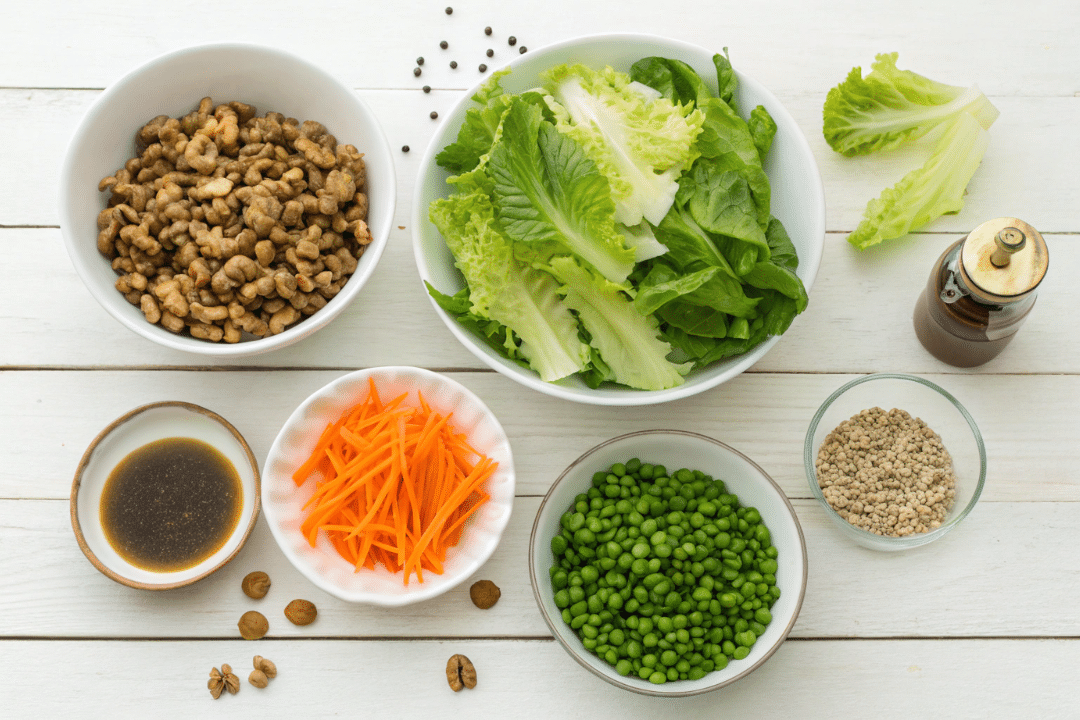
A focused shopping list and clear swaps make assembling this savory filling fast and predictable. Below are the component groups so you can shop and prep at once.
The Sweet-Salty Sesame Sauce
Ingredients: tamari or soy sauce, rice vinegar, maple syrup or agave, sesame oil, and optional hot sauce.
Why each matters: tamari/soy adds salt and depth, rice vinegar brightens, maple rounds edges, sesame oil gives aroma, and hot sauce is the heat lever. Add the sauce to taste and slowly — brands vary in saltiness.
The Filling
Ingredients: lentils simmered in vegetable broth, onion, garlic, ginger, and chopped walnuts stirred in at the end.
Onion, garlic, and ginger build a savory base so the lentils taste intentional, not just boiled. Stir in chopped walnuts after simmering to preserve crunch — that contrast defines the lentil walnut texture.
To Serve and Swaps
Best leaves: butter lettuce is soft and pliable; iceberg gives crisp structure but can crack. If you have romaine, use the inner leaves and keep them whole. Toppings that pop: shredded carrot, green onions, toasted sesame seeds, and cilantro if you like.
Diet notes: use tamari for gluten-free; pick a neutral oil (canola) or peanut oil for high heat. If the leaves tear, turn this into a chopped salad bowl and spoon the sauce over the ingredients.
For a different use of the filling, try it in hearty patties like these lentil-and-beet burgers.
Cook the Lentil-Walnut Filling and Assemble Like a Taco
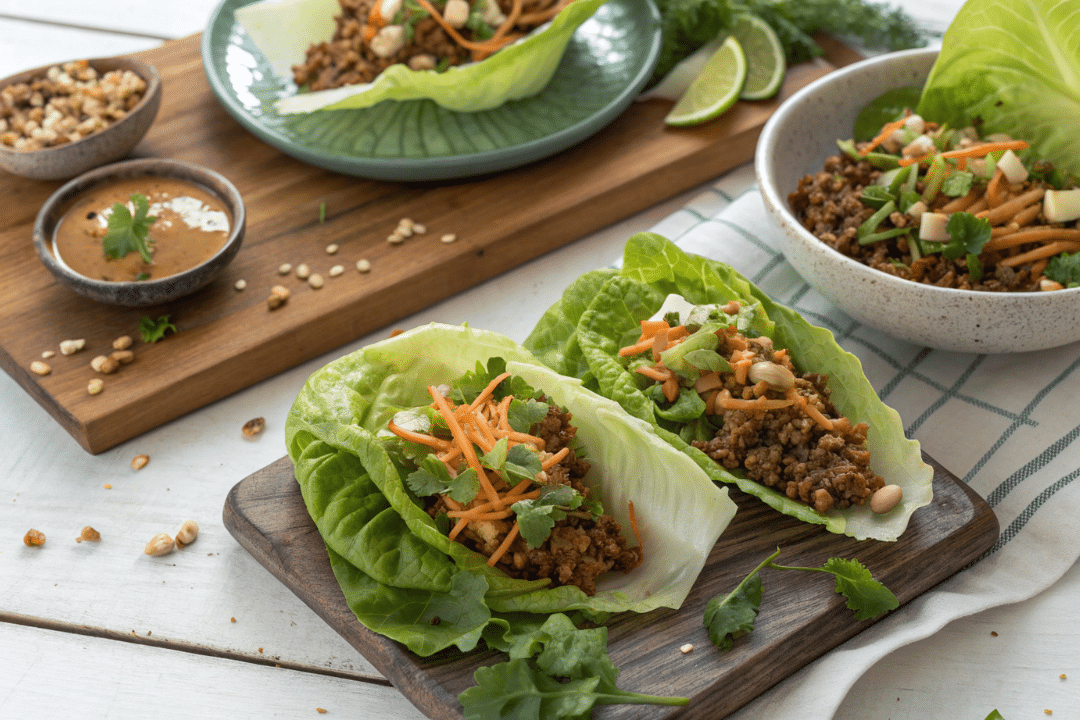
Begin by whisking the sauce in a small bowl and set aside so flavors meld while the pan heats. This saves time and gives the sauce a more balanced profile when you add it later.
Build and Simmer the Filling
Heat a wide pan over medium-high heat, add a teaspoon of neutral oil, then sauté the onion, garlic, and ginger for about 5 minutes. Watch for light browning at the edges and a fragrant lift—don’t let garlic burn.
Add 1 1/2 cups rinsed lentils and about 3 cups vegetable broth, lower the heat to medium-low, cover, and simmer for roughly 10 minutes until the broth is absorbed and the lentils are tender. The mixture may seem wet at first, but it tightens as it cools.
Finish and Taste
Stir in chopped walnuts at the end to keep crunch. Add about half the sauce, then taste and adjust so the filling isn’t overly salty. Finish with sesame or peanut notes to your preference.
Assemble Like a Pro
- Keep each leaf whole and centered on a plate.
- Spoon a modest cup of filling into the middle.
- Top with shredded carrot, green onions, and toasted sesame seeds.
- Spoon a little extra sauce only if needed; fold like a taco and serve.
| Step | Heat | Time (minutes) | Visual cue |
|---|---|---|---|
| Sauté aromatics | Medium-high | 5 | Onion soft, edges lightly browned, fragrant |
| Simmer lentils | Medium-low (covered) | 10 | Broth absorbed, lentils tender |
| Finish & rest | Off heat | 2–3 | Mixture tightens as it cools |
Conclusion
Finish simply: sauce plus a hearty filling folded into crisp leaves makes a quick, reliable meal. Keep the core method in mind — sauce + filling + crunchy toppings — and you can serve these as handhelds, a lunch, or an appetizer.
Store components separately. Refrigerate the filling in a container, keep the head of leaves cold, and jar the sauce so you add it at the last minute. This keeps the leaves crisp and the filling texturally intact for leftovers.
If you have leftovers, eat them cold or turn everything into a salad bowl. Adjust heat with hot sauce, boost sesame aroma, or scale sweetness to balance tamari/soy. The base is already plant-based, so you don’t need meat substitutes to make vegan food that feels substantial.
Note on oils and allergens: use peanut oil for high-heat if you like, or a neutral oil. Keep walnuts as the intended crunch or swap with a labeled substitute for guests. For more weeknight-friendly ideas, check Sam Turnbull’s Fuss-Free Vegan cookbook for similar recipes.
Next step: choose butter for pliability or iceberg for extra crunch, cook the filling once, and plan on at least one leftover meal from the batch.
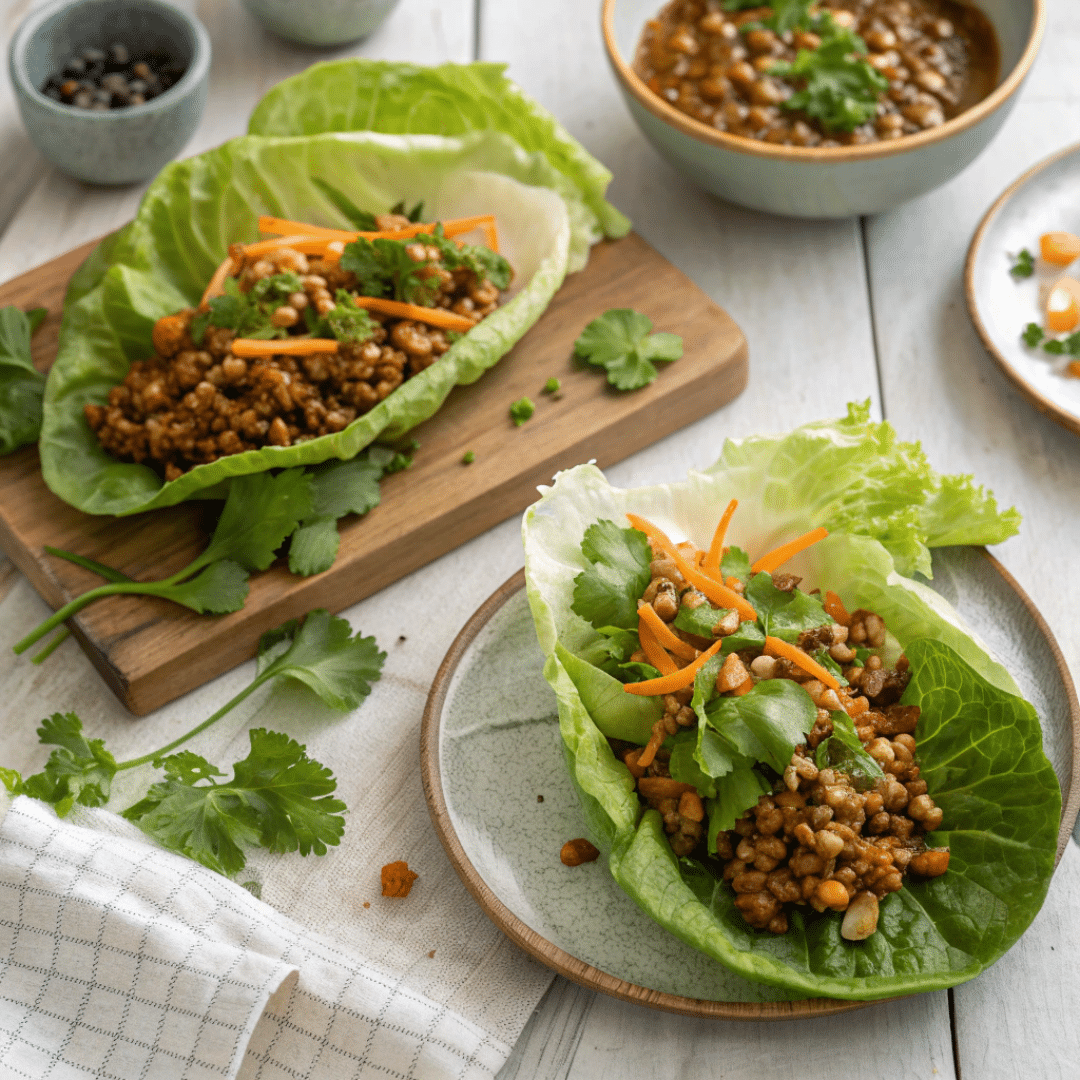
Green Lentil Walnut Lettuce Wraps
Ingredients
Method
- Whisk tamari or soy sauce, rice vinegar, maple syrup, sesame oil, and optional hot sauce in a small bowl and set aside so the flavors meld.
- Heat a wide pan over medium-high heat, add neutral oil, and sauté onion, garlic, and ginger for about 5 minutes until softened, fragrant, and lightly browned at the edges.
- Add rinsed lentils and vegetable broth, reduce heat to medium-low, cover, and simmer for about 10 minutes until the broth is absorbed and the lentils are tender but not mushy.
- Remove the pan from heat and let the mixture rest for 2–3 minutes as it tightens slightly.
- Stir in chopped walnuts to preserve their crunch.
- Add about half of the prepared sauce, stir well, and taste, adjusting with more sauce as needed for balance.
- Arrange whole lettuce leaves on a plate and spoon a modest amount of filling into the center of each leaf.
- Top with shredded carrot, green onions, toasted sesame seeds, and cilantro if using.
- Fold like a taco and serve immediately, adding extra sauce only if needed.
Notes
FAQ
How long do the cooked filling and assembled leaves keep in the fridge?
Can I make this recipe vegan and gluten-free?
Which type of leaf works best if I don’t have butter lettuce?
How can I keep the filling from tasting too salty after adding sauce?
What’s the best method to get toasted nuts without burning them?
Can I prepare components ahead for faster assembly on busy days?
How do I adapt the recipe for a higher-protein meal?
What aromatic and texture additions work well as toppings?
Can I swap the sauce flavor profile (peanut or more sesame)?
What are good timing cues while cooking the filling?
About The Author

John
John Watson is the passionate food enthusiast behind MePlusFood.com. With a deep love for exploring culinary delights, he shares honest restaurant reviews, mouthwatering recipes, and culinary adventures. Join John on his flavorful journey to savor the world one bite at a time.